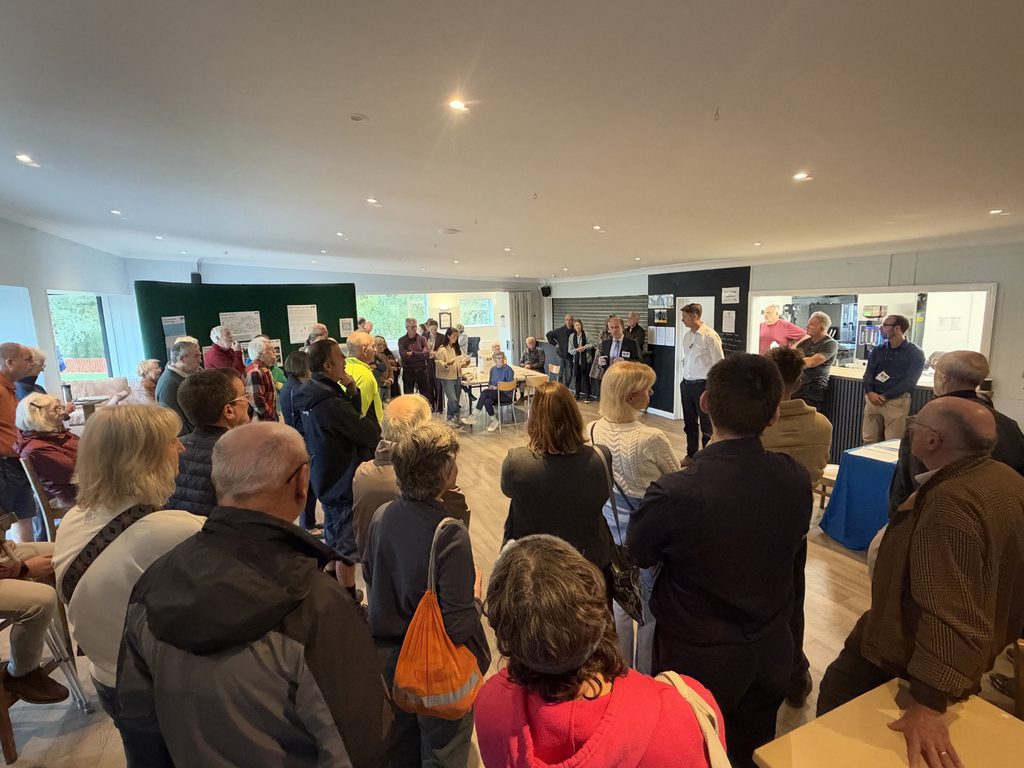
Yesterday the Environment Agency hosted an event at Marlow Rugby Club to update residents on progress following the closure of Temple Bridge back in May 2023.
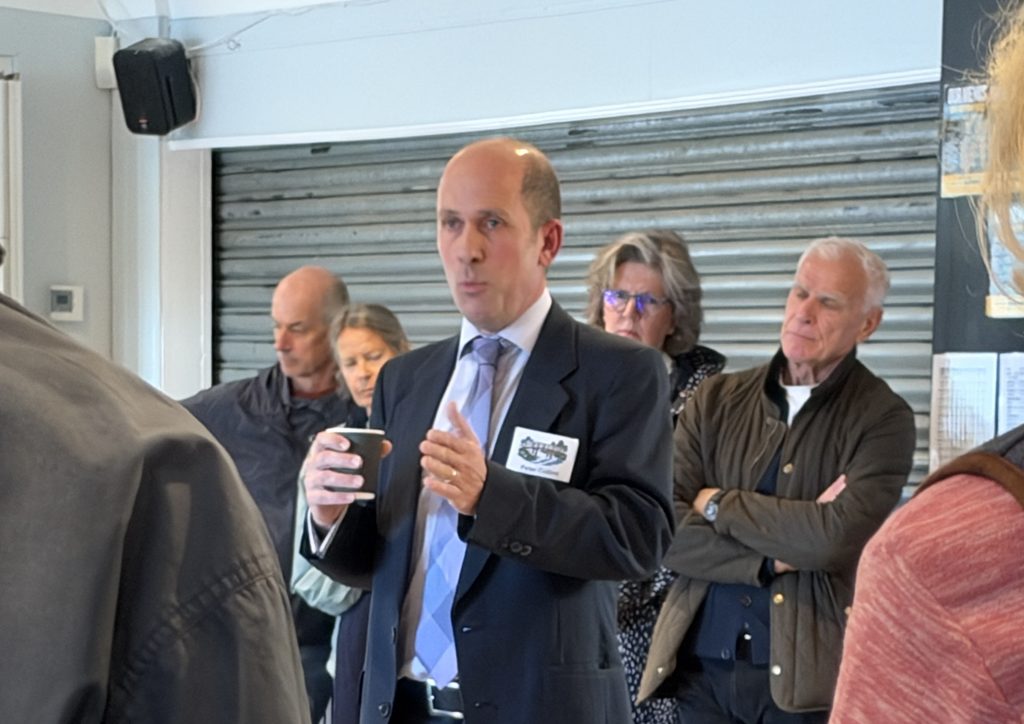
The event ran from 4pm, with a Q&A set for 6pm. We arrived around 5pm, and there were at least a hundred people already there, asking questions, so an impromptu Q&A was already underway. It is safe to say, most attendees were expecting to hear of ideas for a replacement bridge, but in short the EA did not offer any proposed designs. They highlighted a likely replacement cost of £10m, and instead the main proposal put forward was to reroute the Thames Path, via a proposed new crossing at Hurley Weir. They noted that both options remain under development, but the new route option is currently advancing more quickly, and a new route could be operational within a year at a cost of about £30,000.
Points raised by residents including surprise at the stated cost of a new bridge, a more permanent ferry option, crossing Temple Weir instead, a lack of satisfaction at the current detour, and pressing for a proper replacement.
(Further in this article we have all the text and image on display.)
There is a feedback form, to give views on the event… but also the proposals.
From our perspective it seems sensible to explore a short term diversion, which would be preferable to the current diversion along the road towards and through Bisham, but that should not replace continued efforts to work on replacing the bridge. The proposed diversion itself is not , and could never be “ideal” given it takes you away from the river and will have all sorts of accessibility issues.
Transcript of all Information panels and images on view at the event
For those unable to attend, the text of all Information Panels on display, plus images are presented below
History of the crossing
Temple Footbridge was a pedestrian bridge crossing the River Thames near Hurley. It crossed the Thames just above Temple Lock, connecting the banks of Buckinghamshire and Berkshire. This bridge was an important link in the Thames Path National Trail, but it did not always exist.
Previously a ferry point could be found at this point on the river, where walkers could be transported to the opposite bank to continue along the towpath. However, this ferry ceased operation in 1953. This resulted in a campaign by local resident and advocate, Margaret Bowdery, about the access to open spaces and footpaths.
17 years after the ferry closure, in 1970, Margaret Bowdery called a public meeting to ‘save our paths’, with over 100 people in attendance. As part of the campaign for the construction of a bridge, Bowdery raised over £2,000 through local support, with a further £7,000 from “central office”. Further funding support came from a mix of private companies, local councils, charities, and public donations.
The bridge was built by Thames Water, who were the Navigation Authority for the non-tidal Thames at the time, taking a further 19 years to raise the funding and gain the relevant approvals. The bridge was opened by Lord Hesketh on 24 May 1989 as part of the Thames Path project. The completion of this bridge opened 16 miles of Thames Path National Trail. When Thames Water was privatised, the bridge was passed to the National Rivers Authority.
At 46m long, Temple Footbridge was the longest hardwood bridge in Britain. The centre of the bridge measured 6.51m above the water level. This therefore allowed the passage of a range of vessels to continue along the river.
A feat of engineering, this complex design does however mean that upgrades and replacements are extremely costly and can take a long time to implement after exceeding its 30 year design life.
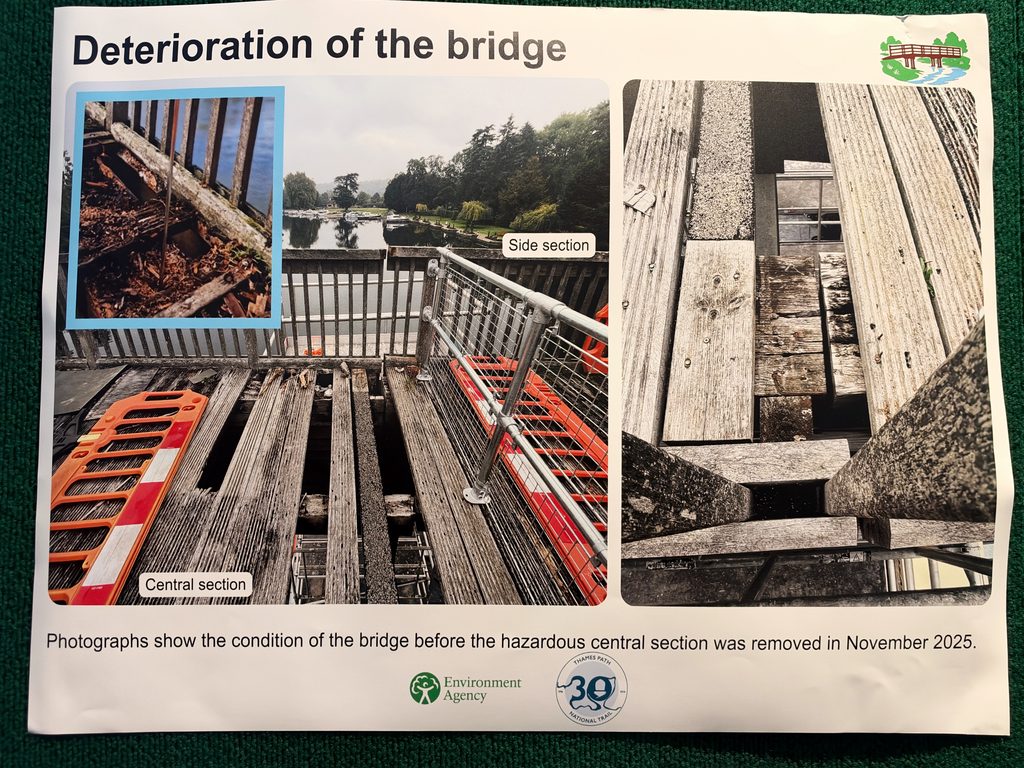
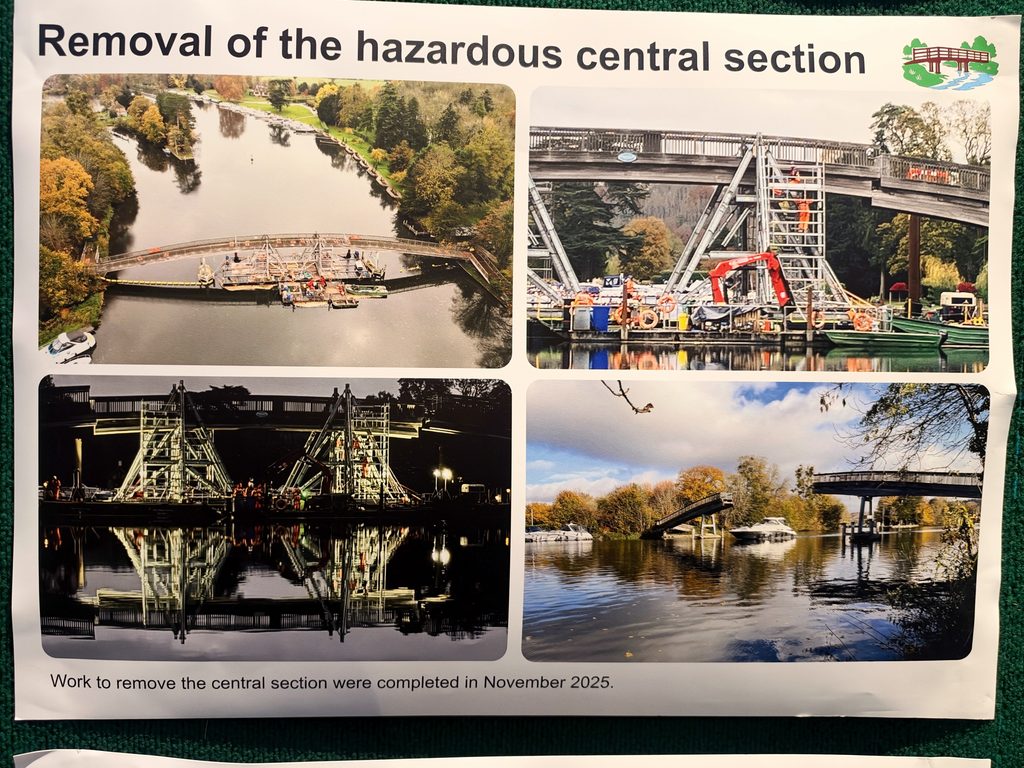
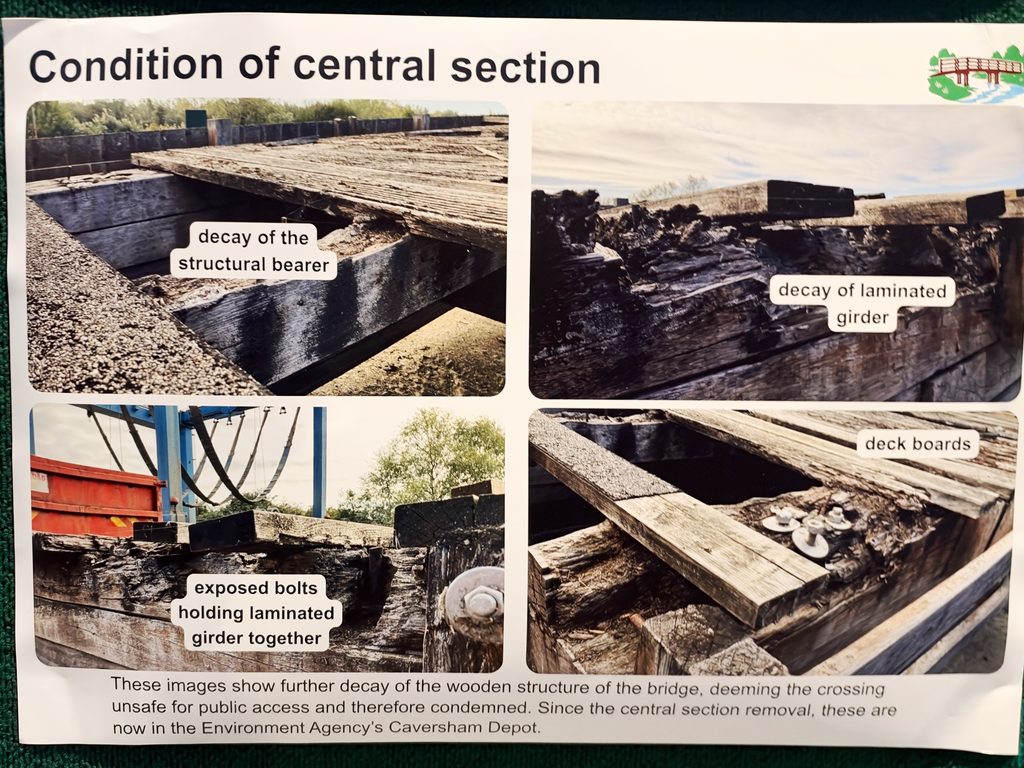
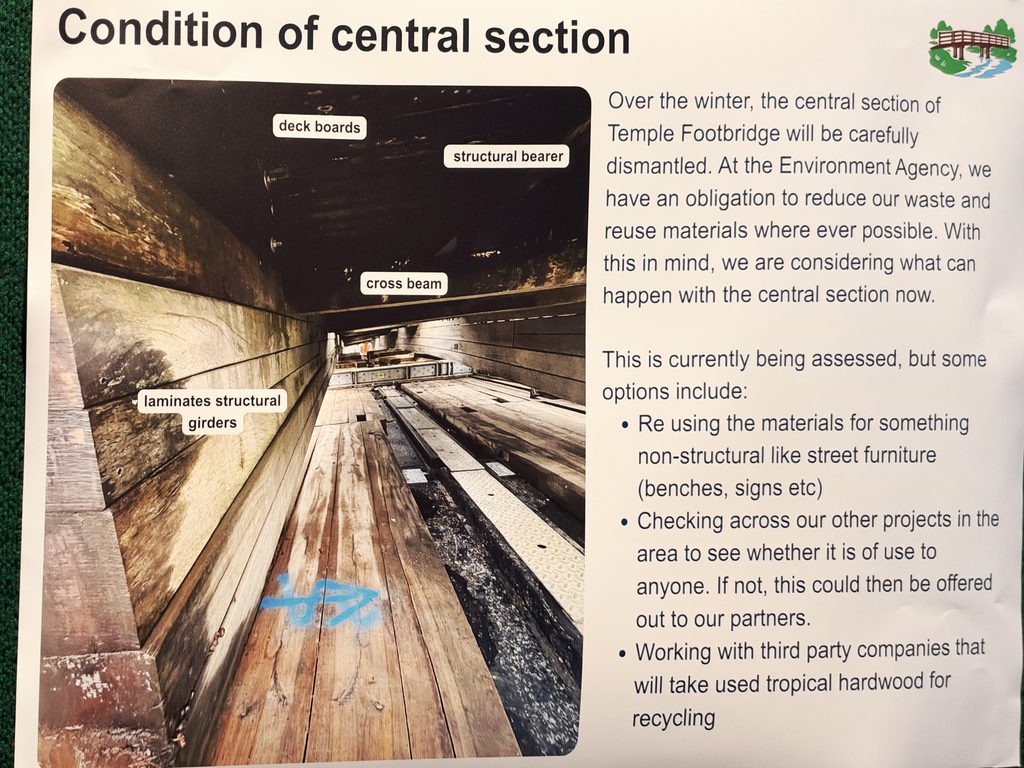
What our investigations have shown
As the current structure cannot be repaired, the Environment Agency team has been working with our partners and consultants to review options for Temple Bridge.
The Environment Agency commissioned environmental surveys, undertook initial design work and investigated whether existing access ramps could be used. We also engaged with the two local planning authorities and a construction contractor on these matters.
Our studies show that to replace the bridge and meet the required modern design standards will be a substantial construction project, likely to cost in the region of £10m.
Environment Agency funding has to be spent on operational assets, which directly exist for flood risk management, water resources or navigation purposes. Temple Bridge is not operational asset and so does not qualify for funding through Environment Agency budgets.
Working with the Thames Path Partnership, they have identified an alternative new route that would include crossing Hurley Weir which would be much more cost effective and quicker to deliver. The Environment Agency is supportive of this option.
Thames Path Partnership have consulted the Environment Agency and other third parties on the route. The Environment Agency will support the Partnership as they seek to promote the new route.
- with many thanks to our website sponsors -
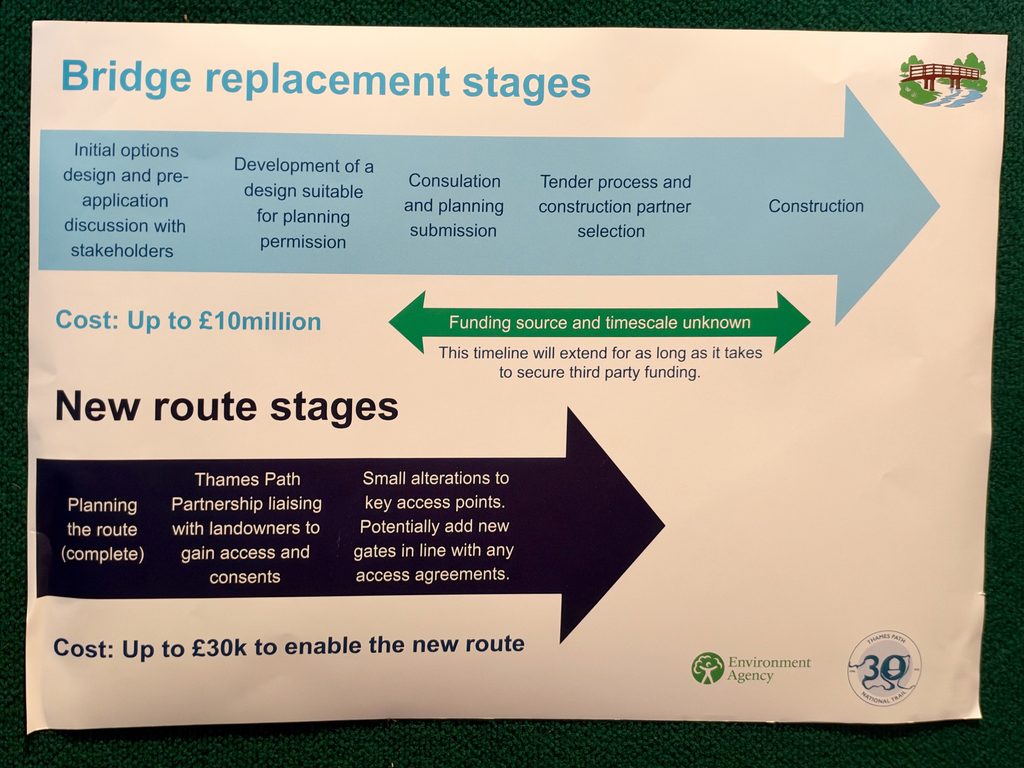
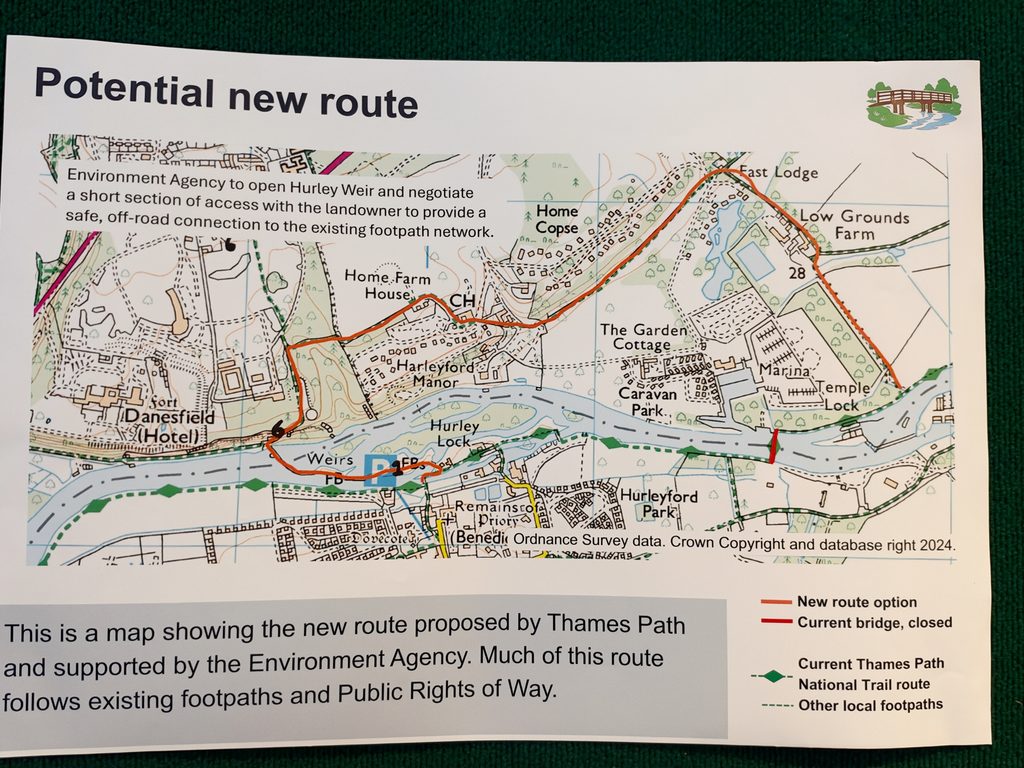
A New Route Across the River Thames
The Environment Agency are supporting the Thames Path Partnership to reinstate the ability for the public to cross the River Thames between Temple and Hurley as part of the Thames Path National Trail. The original route across the river was via Temple Footbridge but following the conditions assessments of the structural integrity of the bridge, this is now closed.
Whilst we have investigated the option of building a new bridge, this is costly and will take a long period of time. We believe the quickest and most cost-effective solution to be a new route across Hurley Weir and along existing Public Rights of Way. The project team are supporting the Thames Path Partnership to progress the new route option.
The Environment Agency would be supportive of another organisation, private or otherwise, taking ownership of the bridge and project. This would require their exploration of a replacement and taking responsibility of ongoing maintenance of the bridge.
This could mean that the new route proposal would sit as an interim solution, whilst long-term aspirations for a bridge may still be realised.
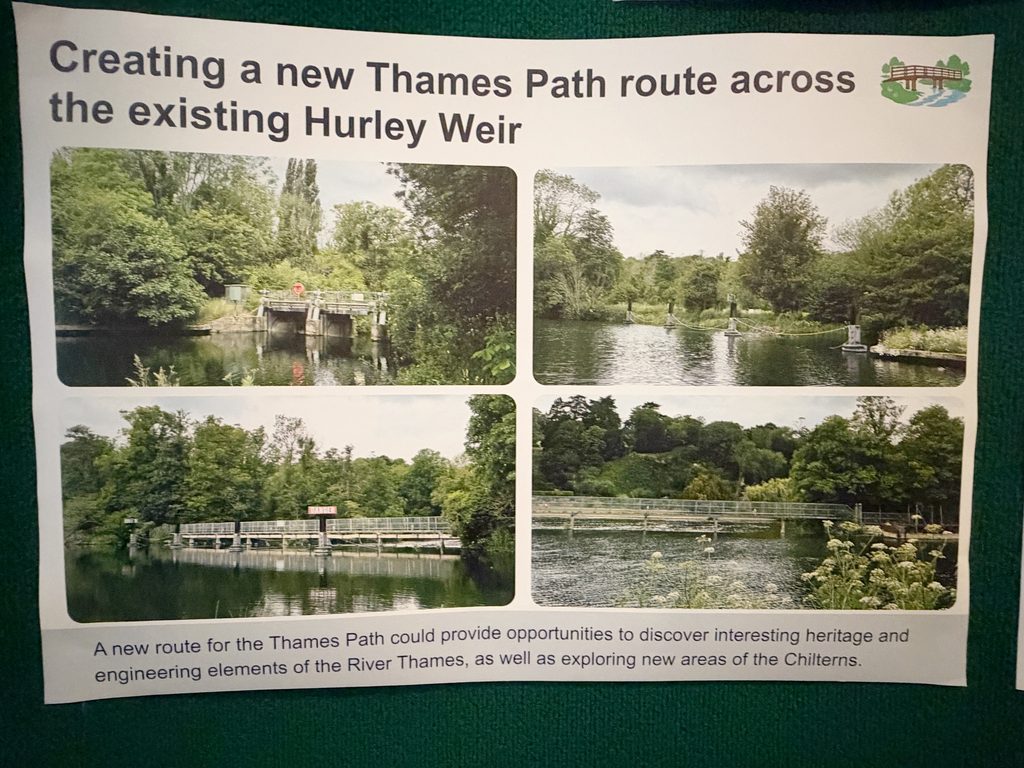
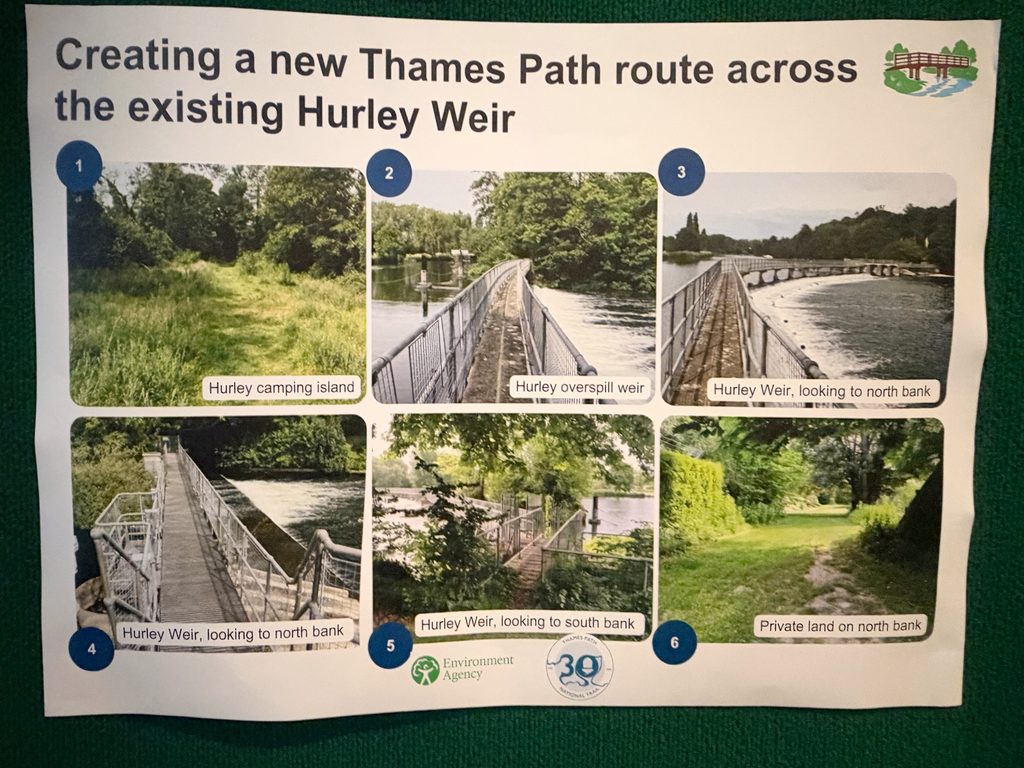
A new Thames Path route
The Thames Path Partnership have proposed diverting the Thames Path National Trail through creating a new section of permissive path. The alternative route would cross the River Thames at Hurley lock, joining scenic footpaths north of the river near Harleyford Manor, before rejoining the river upstream of Temple Lock, linking back to the existing Thames Path.
The Thames Path Partnership are investigating the feasibility of this option, consulting multiple land and asset owners, including the Environment Agency, and will need to obtain permissions from landowners. Rerouting the Thames Path over Hurley Weir would require some work to improve accessibility and widen walkways. Therefore, this route would not be open for public use until the required works are complete.
Both options remain under development, but the new route option is currently advancing more quickly. Should the new route option be progressed, the local community, local authorities and other stakeholders will be consulted.
- The new route would take walkers and path users past historic Thames assets, including weirs and other structures.
- The new route would link Hurley village with Temple Lock and the Harleyford area.
- A new route could be operational within a year.